
Cut resistant gloves
Sheet metal, glass, sharp edges. What matters is not the highest class but the lowest one that covers the risk, because every step up costs dexterity.
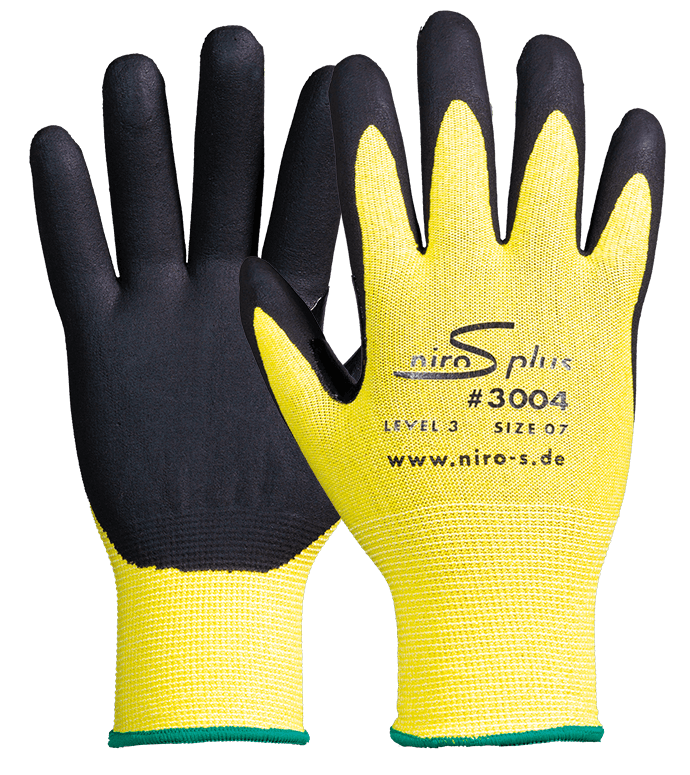
NIRO-S plus #3004
HPPE - 18 Gauge
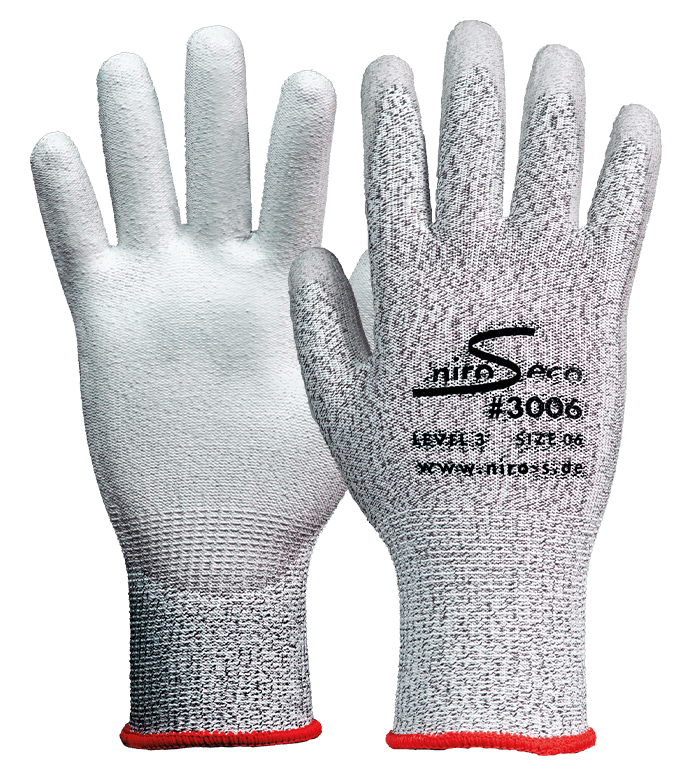
NIRO-S eco #3006
HPPE - 15 Gauge
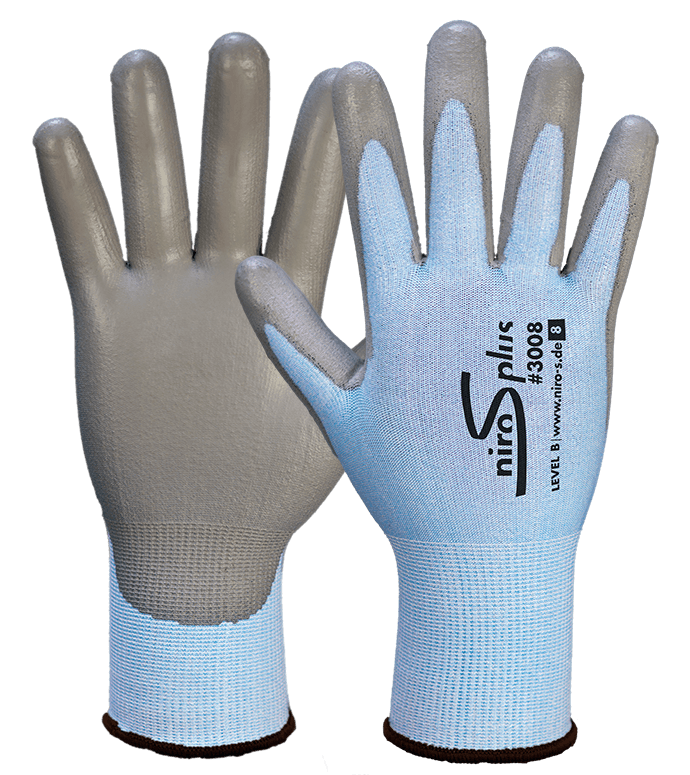
NIRO-S pro #3008
HPPE - 18 Gauge
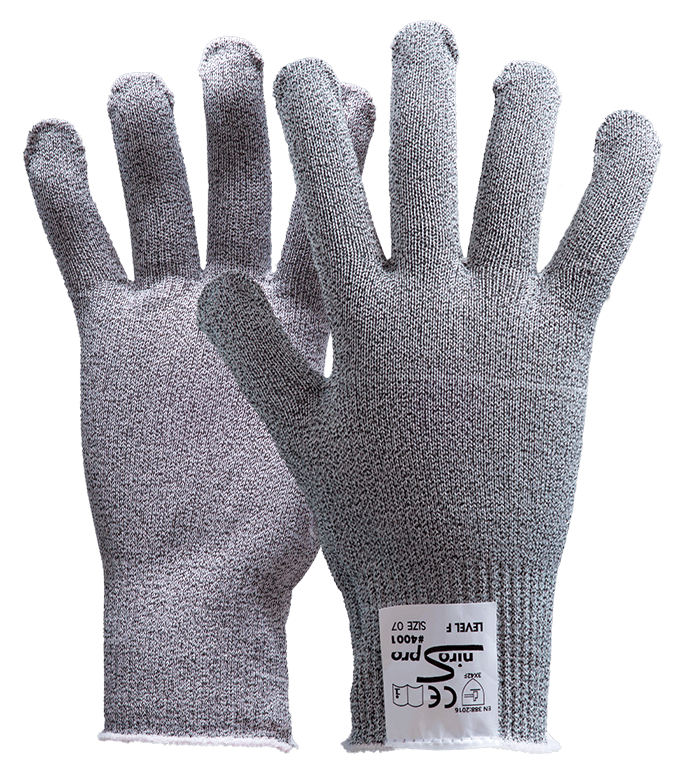
NIRO-S pro #4001
Brinix 10 Gauge
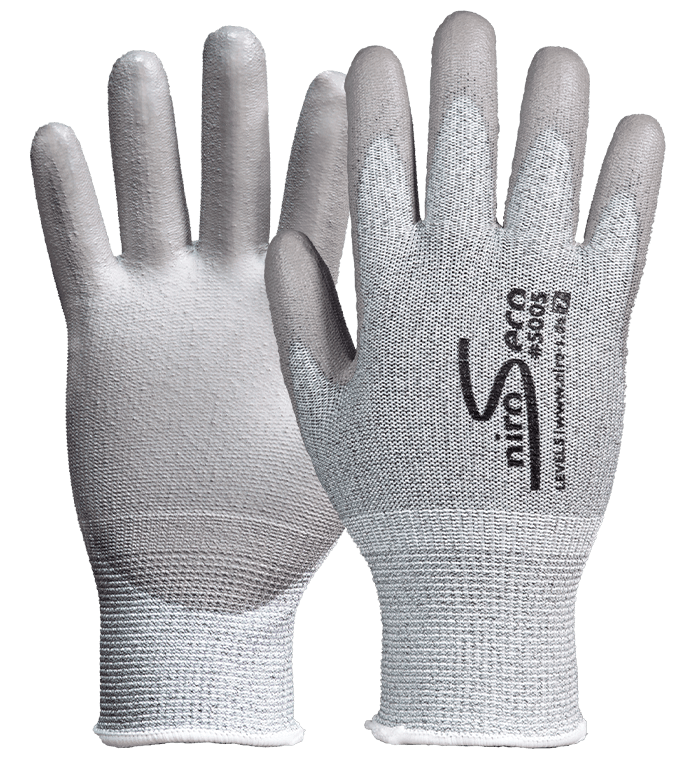
NIRO-S pro #5005
HPPE - 13 Gauge
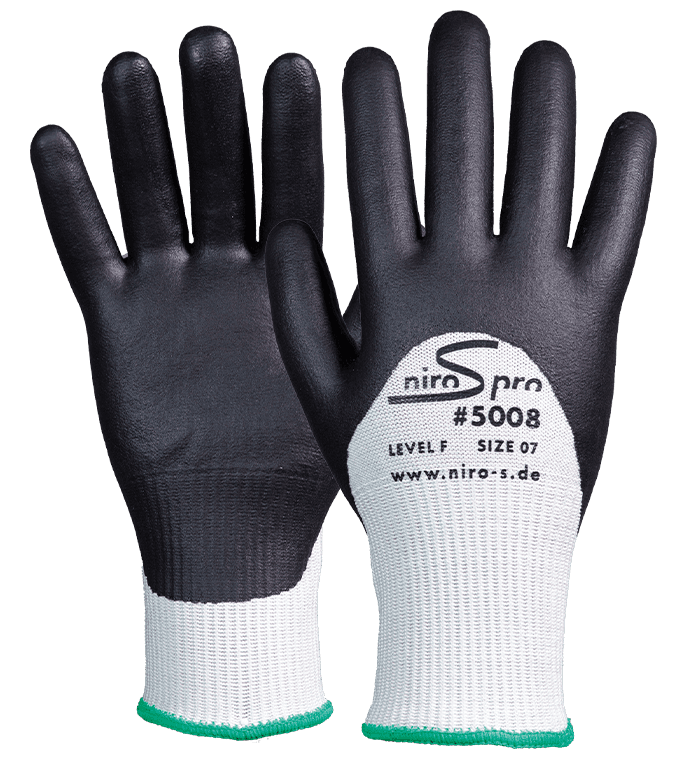
NIRO-S pro #5008
HPPE + stainless steel fiber 13 Gauge
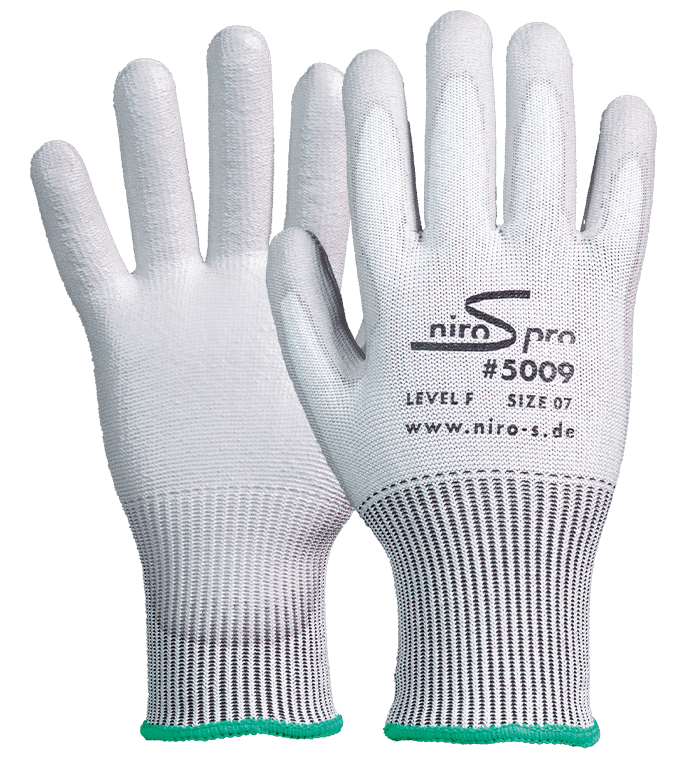
NIRO-S pro #5009
HPPE + stainless steel fiber 13 Gauge
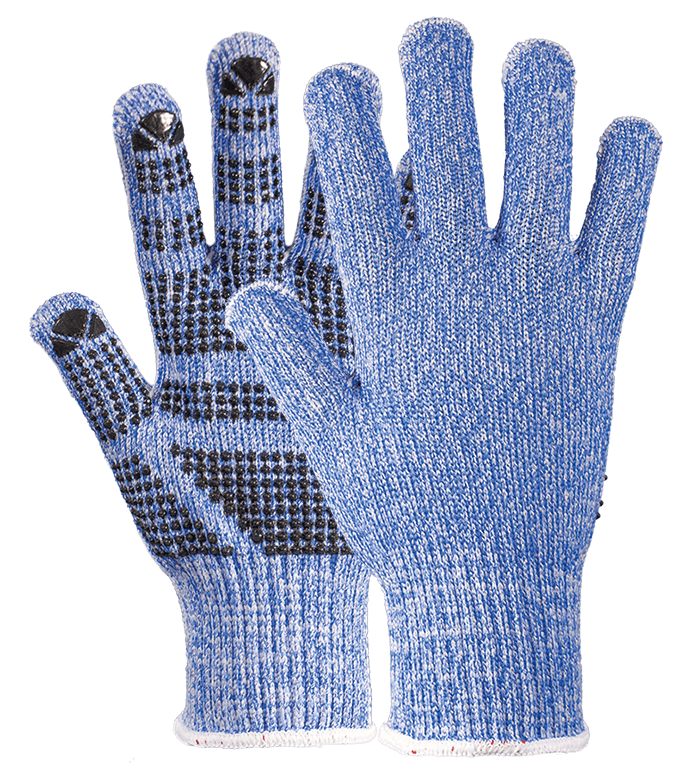
NIRO-S pro #5010
Stainless steel fiber 10 Gauge
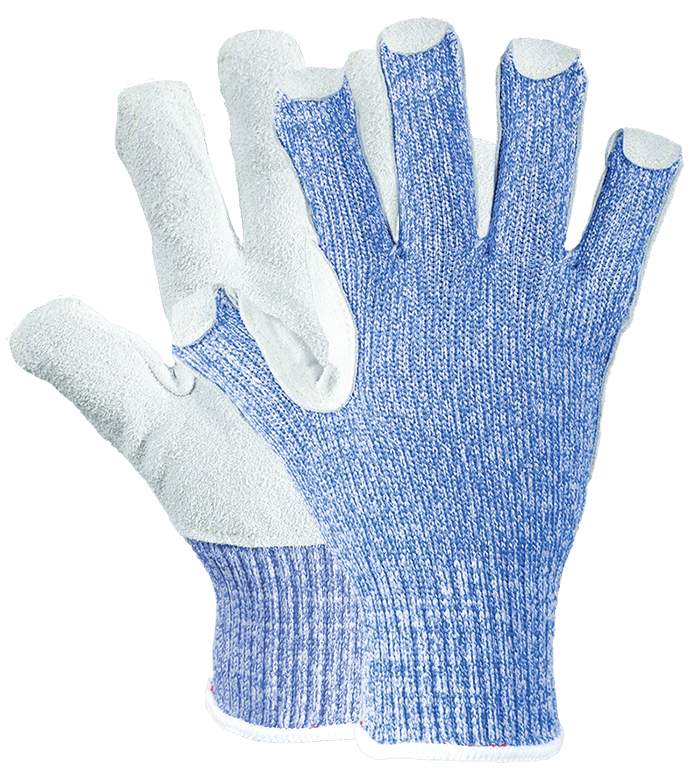
NIRO-S pro #5011
Stainless steel fiber 10 Gauge
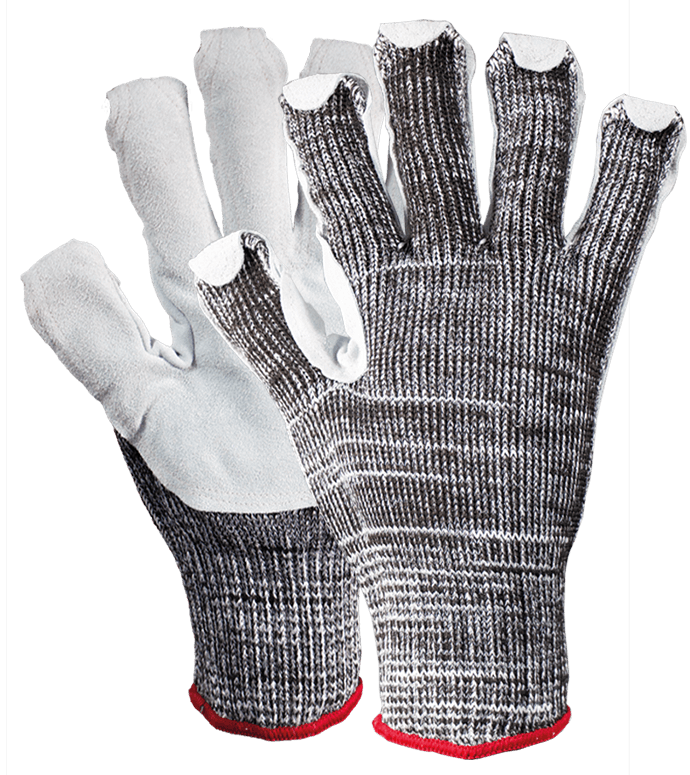
NIRO-S pro #5012
Stainless steel fiber 10 Gauge
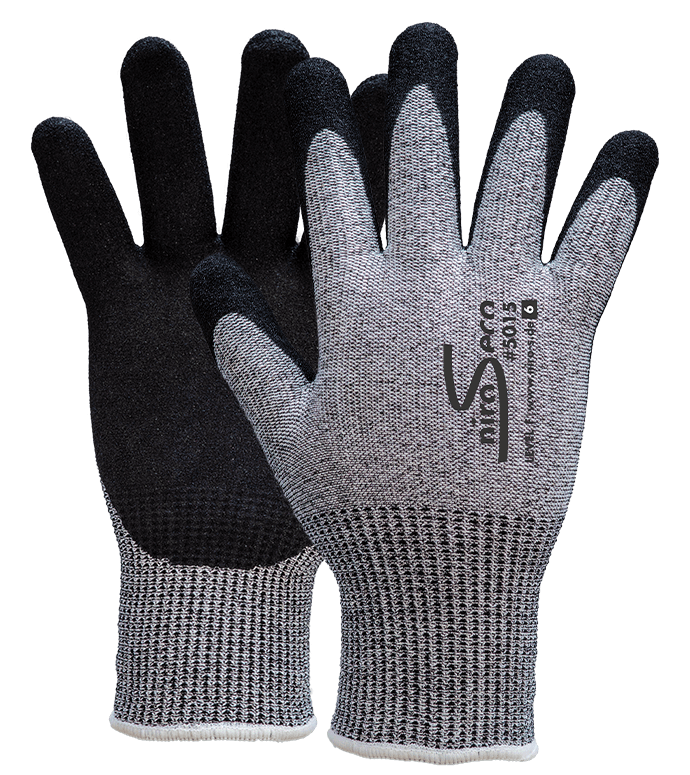
NIRO-S pro #5015
HPPE - 13 Gauge
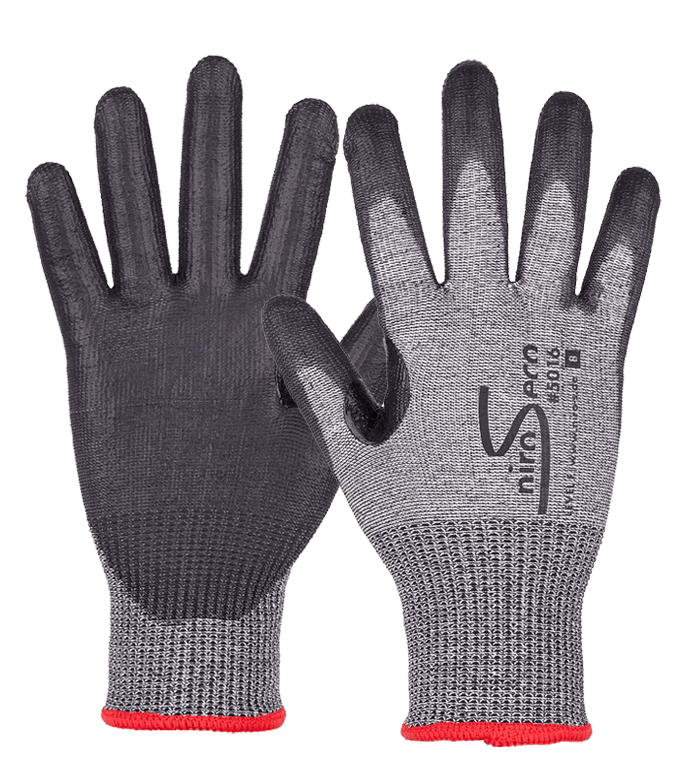
NIRO-S pro #5016
HPPE + stainless steel fiber 13 Gauge
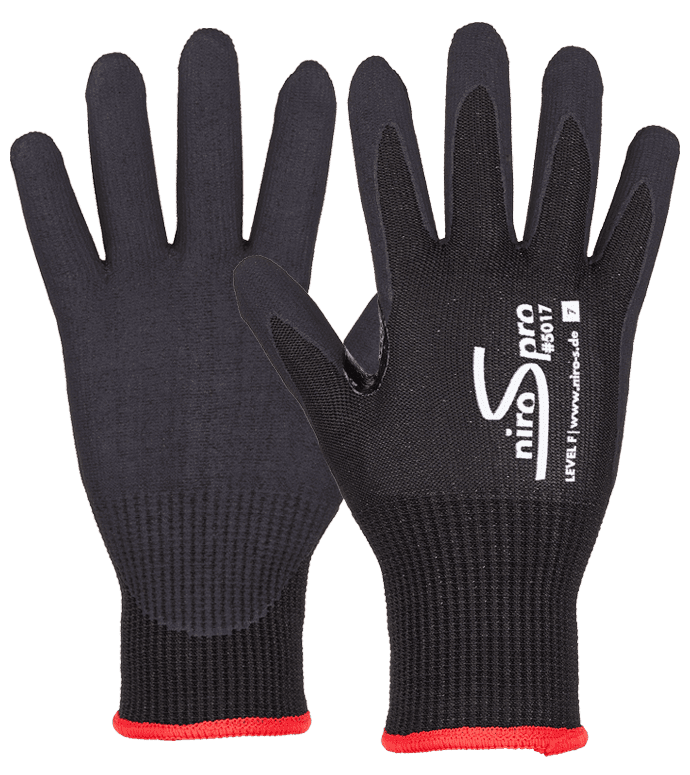
NIRO-S pro #5017
HPPE + stainless steel fiber 13 Gauge
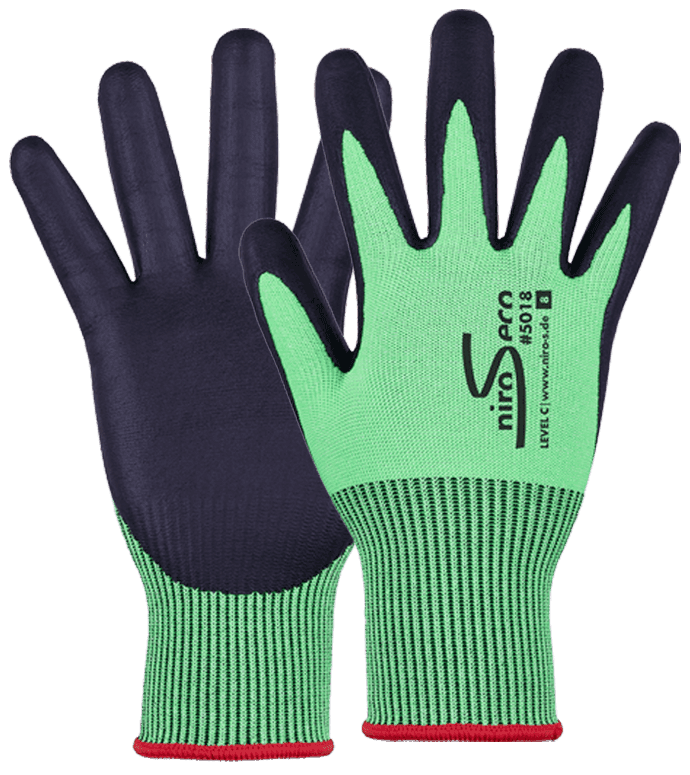
NIRO-S eco #5018
UHMWPE 13 Gauge
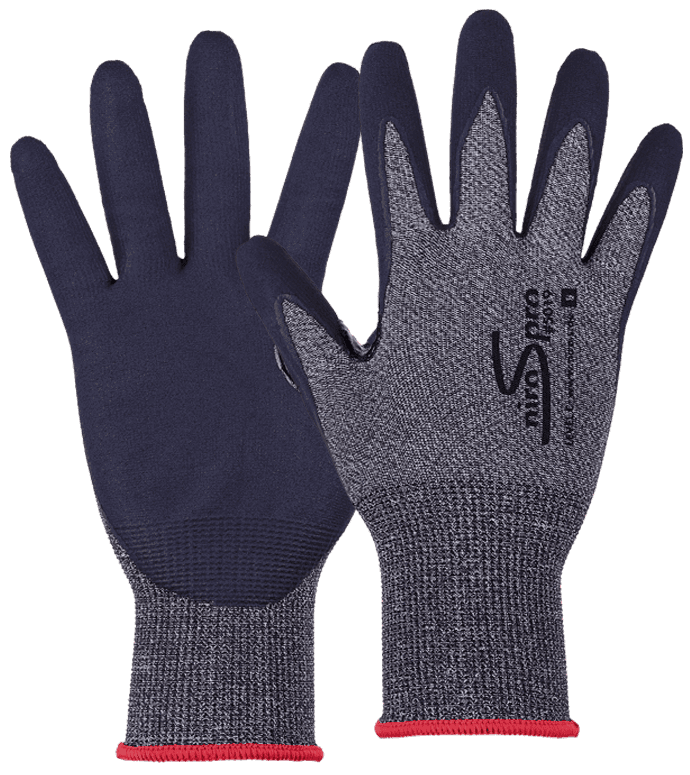
NIRO-S pro #5019
HPPE - 18 Gauge
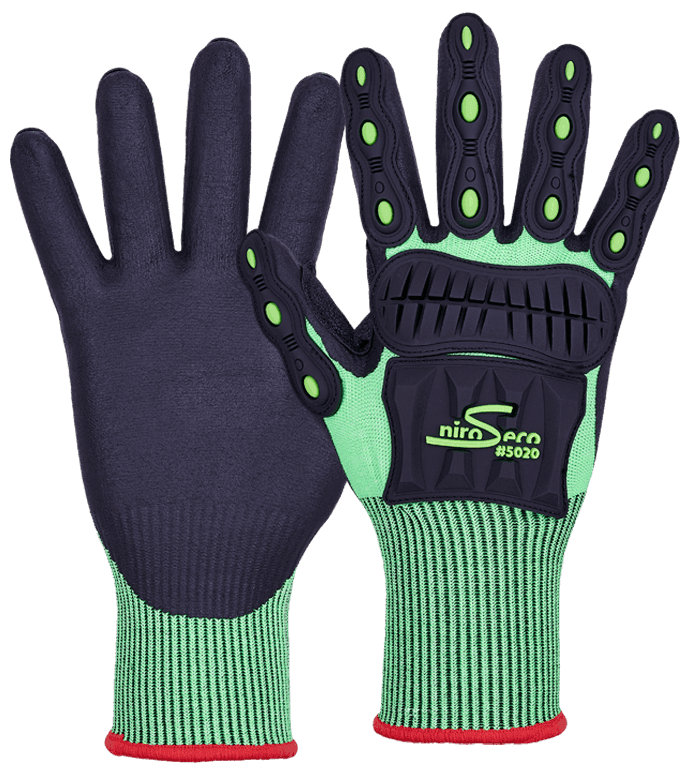
NIRO-S pro #5020
UHMWPE 13 Gauge
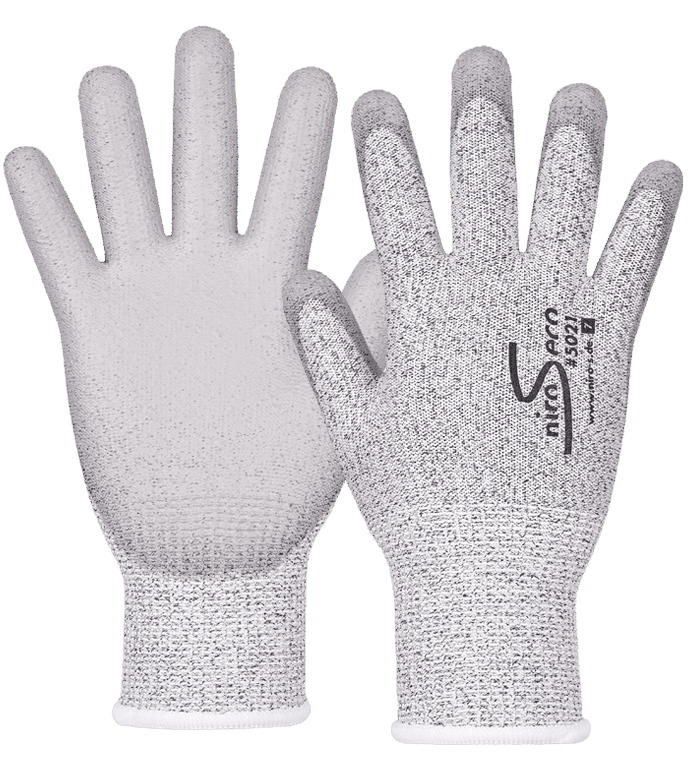
NIRO-S eco #5021
HPPE - 13 Gauge
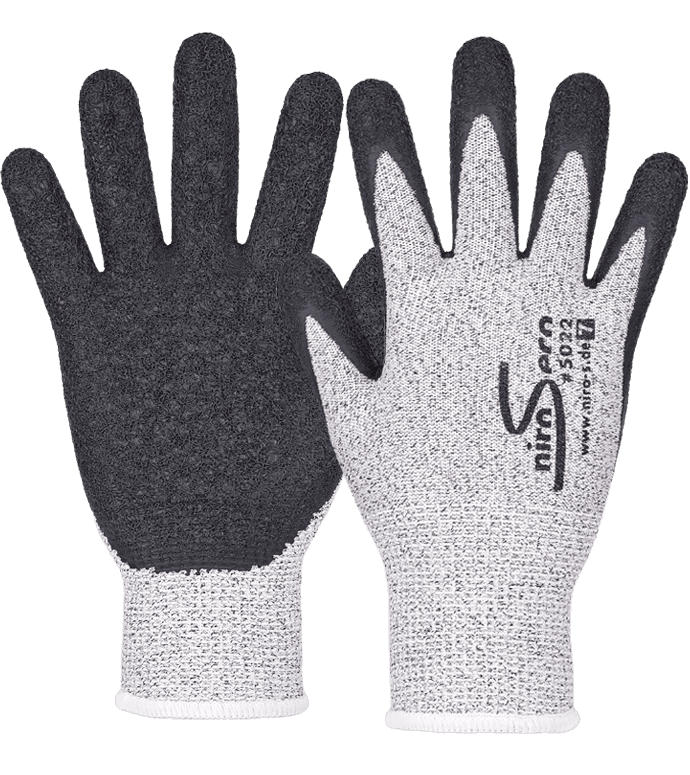
NIRO-S eco #5022
HPPE - 13 Gauge
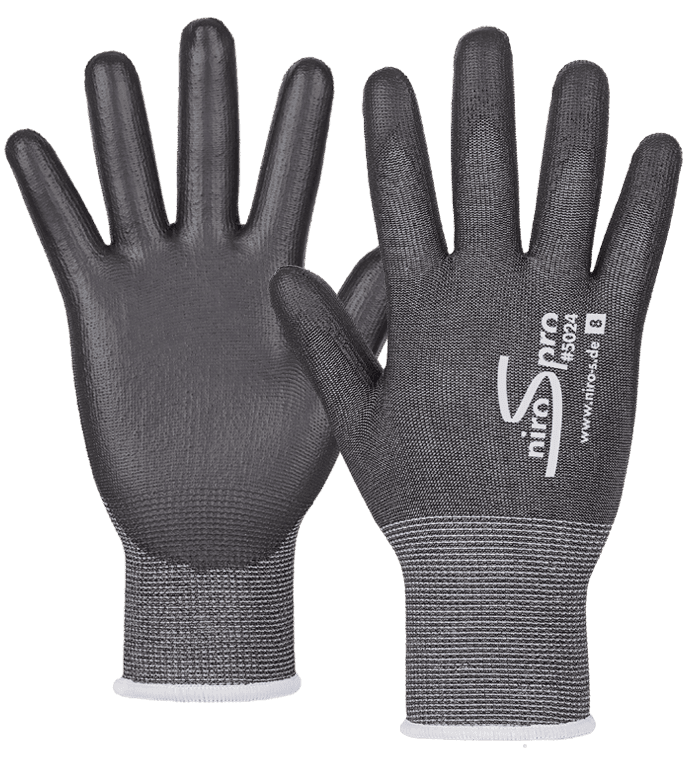
NIRO-S pro #5024
HPPE - 18 Gauge
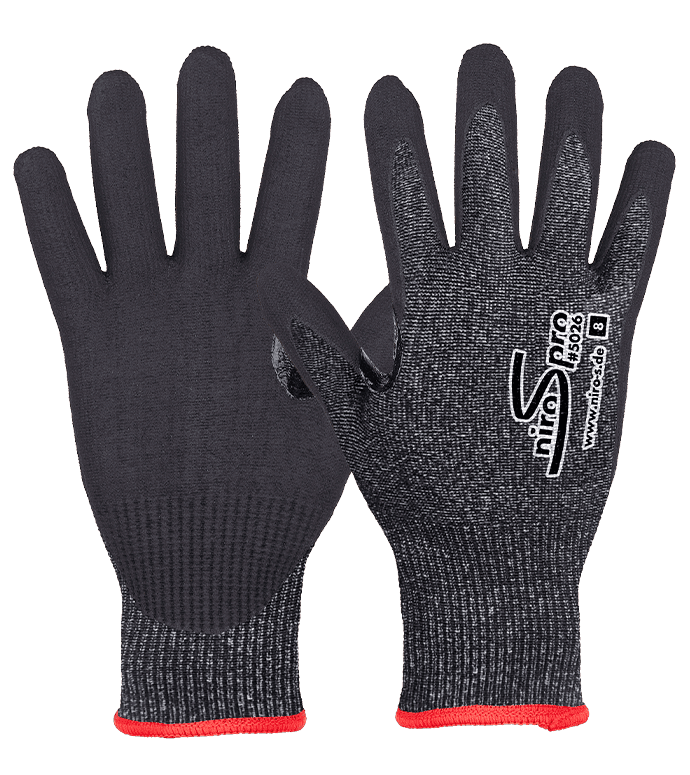
NIRO-S pro #5026
HPPE - 18 Gauge
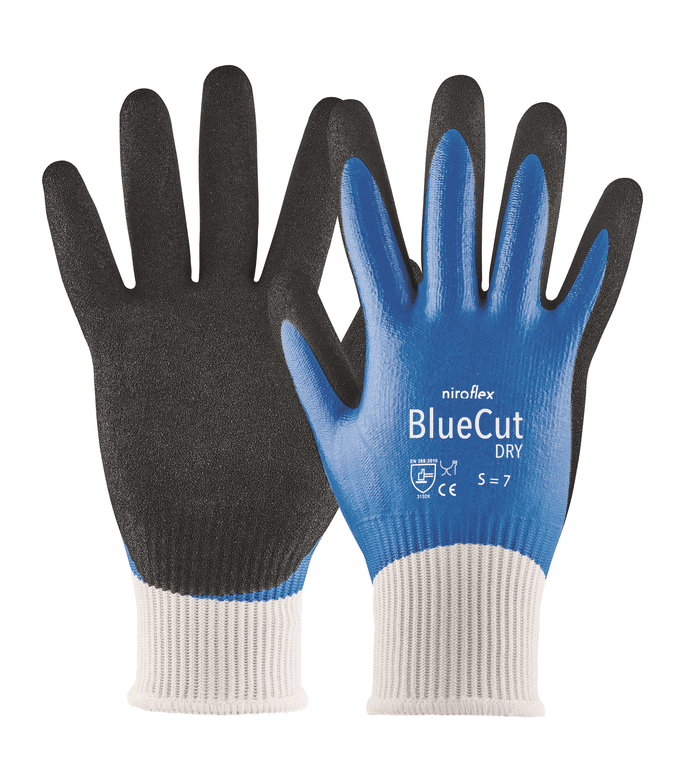
NIRO-FLEX BlueCut dry
Fine knit, 13 gauge
What matters here
The cut protection class appears as a letter A to F in the fifth position of the EN 388 code. It comes from the TDM test, where a blade is drawn across the material with increasing force. A means at least 2 newtons, F at least 30. The steps are not evenly spaced: from E to F the value doubles.
The higher class is not automatically the better choice. More cut resistance means denser or thicker material and therefore less tactile feel. Someone who can no longer pick up a screw will eventually take the glove off, and then the highest class protects nothing at all.
Cut resistance and puncture resistance are two different things. Puncture resistance sits in the fourth position of the EN 388 code and is tested with a standardised probe. It says little about needles and fine points, which have tests of their own.
An X in the code does not mean the glove failed that discipline, it means the discipline was not tested. On cut resistant gloves the X often sits where the coupe test would be, because cut resistant material blunts the blade and the test then yields no valid result.
More on this: what the EN 388 digits mean and which glove suits which job.
Frequently asked
Which class do I need for sheet metal work?
For general sheet metal work and metal assembly, class C is the usual starting point, and class D or E for sharp-edged blanks. What governs is the risk assessment in your own operation, not the category of an online shop.
What do the letter and the older number side by side mean?
The number in second position comes from the older coupe test and runs from 1 to 5. The letter in fifth position comes from the TDM test to ISO 13997 and is the more meaningful value on cut resistant materials. Where both appear, the letter counts.
Does a cut resistant glove protect against a running saw?
No. EN 388 tests against sliding cuts, not against powered tools. Chainsaws are covered by EN 381, a separate standard with its own test.